
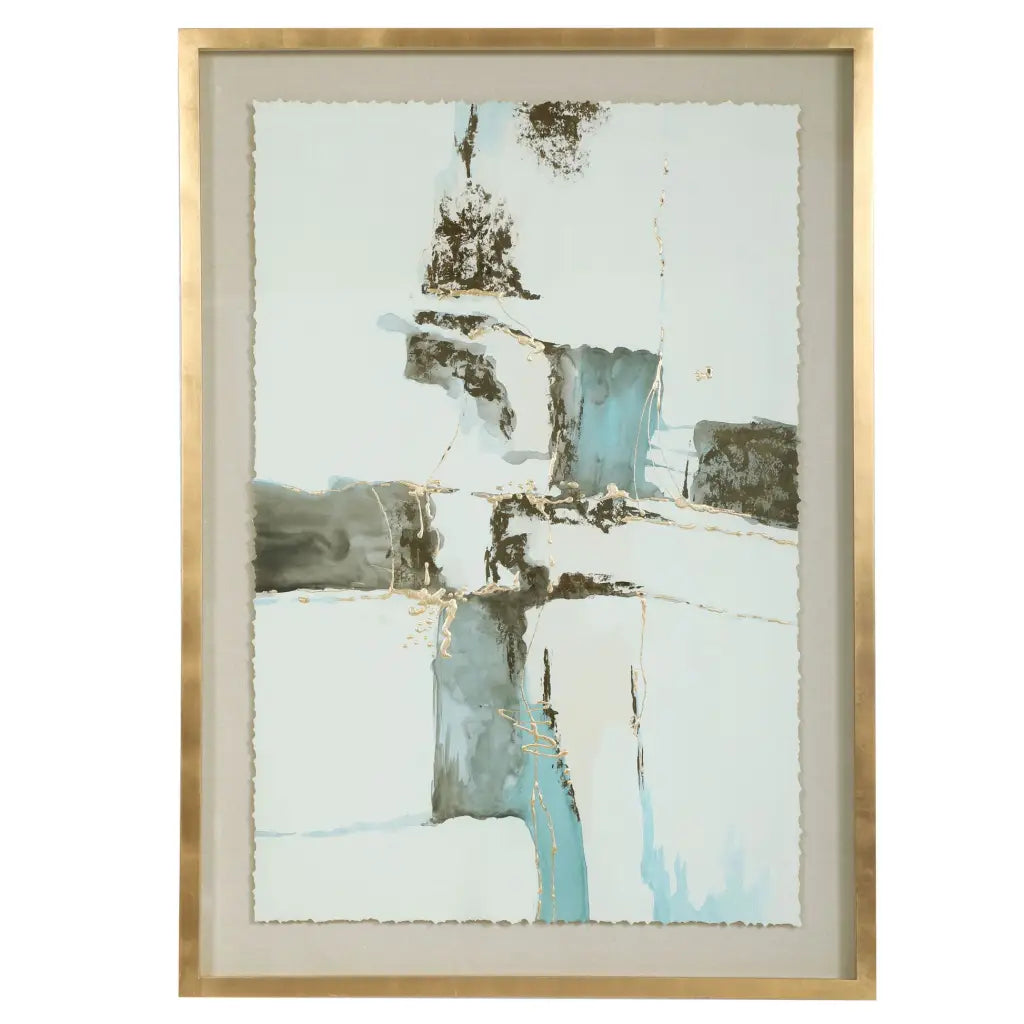
A sofa can be beautifully chosen and still feel unfinished when the wall behind it is bare. The right wall art above sofa gives the room a focal point, connects the furniture to the architecture, and makes the seating area feel intentional rather than simply placed against a wall. The challenge is not finding art you like. It is choosing a size, height, and arrangement that looks right with your sofa, ceiling, rug, and everyday life.
Start With the Scale of Your Sofa
The most common decorating mistake is hanging a piece that is too small. A modest print floating above a wide sectional leaves a lot of empty wall around it and makes even a well-furnished room feel visually scattered.
As a dependable starting point, choose artwork or an overall grouped arrangement that measures about two-thirds to three-fourths the width of the sofa. For an 84-inch sofa, that usually means art spanning roughly 56 to 63 inches wide. This does not need to be one oversized canvas. A pair of large framed prints, three coordinated panels, or a gallery arrangement can reach the same visual width.
That guideline is flexible. A tall, narrow wall may call for a vertical piece or a stacked pair of works. If a sofa sits beneath a dramatic chandelier or in a room with high ceilings, a larger-scale composition can hold its own. In a compact apartment living room, however, oversized art can overwhelm the seating and make the room feel crowded. The goal is proportion, not the biggest piece possible.
How High Should Wall Art Above a Sofa Hang?
For most living rooms, hang the bottom edge of the artwork about 6 to 10 inches above the top of the sofa back. This creates a visual relationship between the two rather than making the art appear to hover too high on the wall.
The familiar gallery rule of centering art at eye level still matters, but it needs adjusting above furniture. If you follow eye level alone in a room with tall ceilings, the art can end up separated from the sofa by an awkward amount of blank wall. Treat the sofa and art as one composition first.
Measure from the top of the sofa back, not from the seat cushion. If there is a console table behind a floating sofa, use the top of the console as the nearest reference point. And before committing to nail holes, use painter's tape or cut paper in the artwork's dimensions. It takes minutes and quickly reveals whether your intended placement is too high, too narrow, or off-center.
Choose a Layout That Fits the Room
One large statement piece is often the cleanest choice for a modern room. It works especially well above streamlined sofas, low-profile sectionals, and upholstery with a strong silhouette. Abstract art, a large landscape, or an architectural photograph can introduce personality without adding visual clutter.
A matching pair of framed works brings symmetry and calm. This layout suits traditional, transitional, and polished contemporary interiors, particularly when the sofa is centered on the wall. Keep the gap between the two pieces fairly tight, usually 2 to 4 inches, so they read as a pair rather than two unrelated pictures.
Three-panel arrangements offer more rhythm and can visually extend a long sofa. Their effect depends on spacing: leave roughly 2 to 3 inches between panels, then evaluate the full width as one unit. This approach is useful when a single oversized canvas would be difficult to transport or when you want a more tailored look.
A gallery wall feels personal and collected, but it requires more planning than people expect. Use a consistent element to hold it together, such as matching frames, a focused color palette, similar subject matter, or a repeated mat color. Lay out the arrangement on the floor first, then transfer it to the wall with paper templates. A gallery wall should have an outer shape - rectangular, gently organic, or vertical - rather than spreading randomly across the wall.
Let the Sofa Lead the Color Conversation
Art does not have to match the sofa exactly. In fact, a perfect color match can look flat. Instead, pull one or two colors from the larger room: the rug, pillows, drapery, accent chairs, or a favorite decorative object. A neutral sofa gives you freedom to use bolder art, while a richly colored sofa often benefits from art with more breathing room and a calmer background.
Consider the mood as well as the palette. Soft landscapes and muted abstracts support a quiet, relaxed space. High-contrast graphic art creates a more energetic, contemporary feeling. Black-and-white photography can provide structure in a room with layered textures, patterned upholstery, or colorful accent pillows.
Frames deserve the same attention. Black frames add definition and suit modern interiors. Warm wood feels approachable and works well with natural finishes. Brass or gold-toned frames can complement lighting and hardware, but too many metallic finishes can make a room feel overly formal. When in doubt, repeat a finish already used nearby so the art feels connected to the room.
Work With What Happens Behind the Sofa
The wall is only one part of the decision. Think about how the room is used. If the sofa is in a busy family room, avoid placing heavy, fragile pieces where children may jump or lean. Use appropriate wall anchors and secure hanging hardware, especially for large framed art or mirrors.
A mirror can be a smart alternative to artwork when the room needs reflected light or a sense of depth. Above a sofa, though, it should be sized with the same care as art. A small mirror will not solve a large blank wall. Also consider what it reflects. A mirror that captures a window, chandelier, or attractive adjacent room can brighten the space; one that reflects a television or cluttered area may not add much.
Wall texture matters, too. A bold wallpaper, stone surround, or wood-slat feature may need only a single restrained piece, if any. On a plain painted wall, art can carry more of the room's character. There is no requirement to fill every wall simply because it is empty.
Avoid the Details That Make Art Look Accidental
Center the arrangement over the sofa, not necessarily over the wall. If the sofa is intentionally offset because of a window, fireplace, or room layout, centering the art over the furniture will usually look more balanced.
Keep nearby elements in mind. A floor lamp with a large shade, a tall plant, or a bookcase can compete with art that is already too wide. Likewise, if a sectional has a chaise on one side, the visual center may differ from the literal center. Step back to view the room from its main entry and from the seating area before making a final call.
Lighting can elevate the result. Natural daylight reveals color, while table lamps and sconces make the wall feel warm at night. Direct picture lights look elegant in the right room, but they are not essential. Art should still be enjoyable without specialty lighting.
Make the Choice Feel Personal
The best wall art is not selected only to fill a measurement. It should give you something to notice when you settle into the sofa at the end of the day. That might be a serene coastal scene, an expressive abstract, a collection of family photographs, or a graphic print that brings welcome contrast to a neutral room.
If you are furnishing a living room from the ground up, bring photos and room measurements to R&R Furniture Gallery in Fountain Valley. Seeing sofas, rugs, lighting, wall art, and decorative accents together can make proportion and color choices much clearer. Start with the sofa you love, then choose art that gives the room a finished, lived-in point of view.