
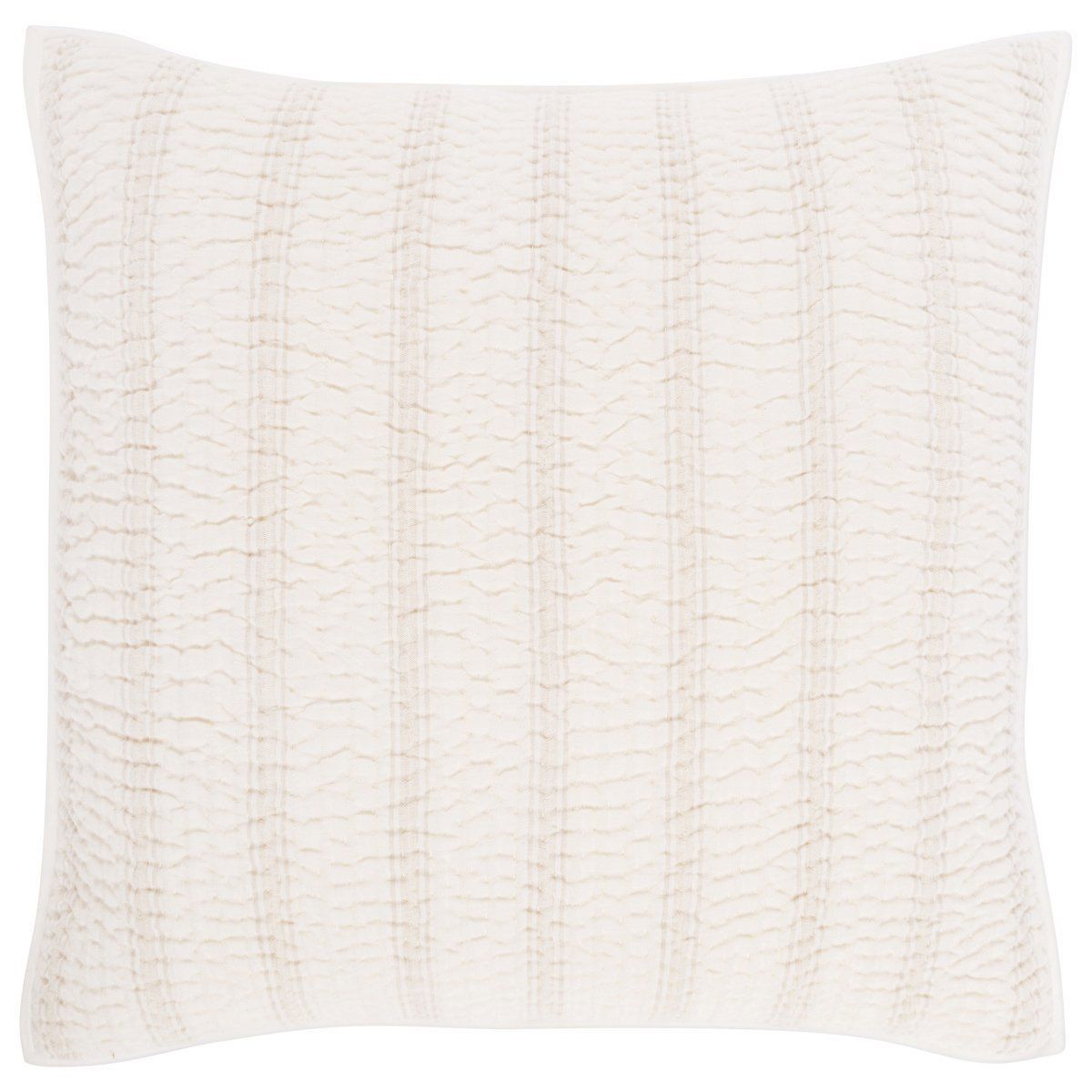
A beautifully upholstered sofa can look unfinished with one small pillow placed at each end. Learning how to layer decorative pillows gives a room the finished, comfortable look people notice right away, without making the seating feel too precious to use. The goal is not to pile on as many pillows as possible. It is to create a balanced composition that supports the furniture, your color palette, and the way your household actually lives.
Start With the Furniture, Not the Pillow
Pillows should work with the scale of the sofa, sectional, accent chair, or bed beneath them. A generous sectional can carry larger pillows and more variation, while a slim apartment sofa needs a lighter hand. When pillows are too small for substantial furniture, they can look scattered rather than intentional. When they are too large or too numerous, they take up the seat and become something to move before anyone can relax.
Begin by looking at the furniture's silhouette. A clean-lined modern sofa usually looks best with a tailored pillow arrangement and a few deliberate textures. A traditional sofa with rolled arms, tufting, or ornate wood details may support more layers, richer fabrics, or a decorative lumbar pillow. The same principle applies in the bedroom: a low-profile platform bed needs a simpler arrangement than a tall upholstered headboard.
Before choosing colors or patterns, decide how much visual weight the furniture can handle. That one decision makes the rest of the process easier.
How to Layer Decorative Pillows by Size
Size is what gives an arrangement depth. Start with the largest pillows in the back, then step forward with smaller squares, rectangles, or lumbar pillows. This keeps every piece visible and prevents the arrangement from looking flat.
For a standard sofa, two larger square pillows at each end can form the foundation. Add a slightly smaller pillow in front of each, then use one lumbar pillow near the center if the sofa is long enough. On a sectional, think in zones rather than trying to make every seat identical. The corner is often a natural place for a fuller grouping, while the open chaise may need only one well-sized pillow so it remains comfortable for stretching out.
A bed arrangement follows the same back-to-front logic. Sleeping pillows and shams create the base. Decorative Euro pillows or larger squares bring height, and smaller accent pillows sit at the front. If you prefer a cleaner look, skip the extra layers and finish with one long lumbar pillow across the bed. It can look just as polished and takes far less time to remake each morning.
Symmetry is dependable, especially in formal rooms or bedrooms. Matching groupings on both sides of a sofa or bed feel calm and organized. Asymmetry has a more relaxed, collected character. It works especially well on sectionals and contemporary sofas, but it still needs balance. A large patterned pillow on one side may be balanced by two smaller, quieter pillows on the other.
Build a Color Story That Belongs in the Room
The easiest way to make decorative pillows feel considered is to pull colors already present in the room. Look at the rug, wall art, curtains, a favorite chair, or even the undertone of the wood finish. Choose one dominant neutral, one supporting color, and one accent color. You do not need to use all three on every pillow.
For example, a warm ivory sofa with a natural wood coffee table and a blue-gray rug might use camel velvet, ivory boucle, and muted blue patterned pillows. The colors relate to the room without making the sofa look overly matched. On a charcoal sectional, cream, cognac, soft taupe, and a touch of olive can bring warmth without competing with the upholstery.
If your sofa is already a bold color or has a strong pattern, let the pillows be quieter. A solid or subtly textured pillow can add depth without adding visual noise. Conversely, a neutral sofa is an excellent place to introduce a patterned fabric, especially when the rest of the room needs personality.
It also helps to repeat an accent color at least twice. One small rust-colored pillow can look accidental. Rust appearing in a pillow pattern and again in a lumbar or throw makes the palette feel connected.
Mix Pattern Carefully
Pattern mixing is less complicated than it appears when the colors are related. Combine patterns at different scales: one larger-scale print, one medium geometric or stripe, and one small, subtle design. Keep at least one pillow solid or heavily textured to give the eye a place to rest.
Avoid using several patterns of the same scale. A tight floral, tight plaid, and tight geometric can blur together from across the room. If you love a dramatic print, let it be the focal point and build around it with solids and texture.
Add Texture Before Adding More Color
Texture is often what makes a neutral room feel luxurious and inviting. Linen, boucle, velvet, woven cotton, leather, faux fur, and embroidered fabrics each catch light differently. Even a simple cream-and-taupe arrangement can look layered when the fabrics vary.
For Southern California homes, lighter woven textiles and linen-like fabrics can keep living spaces fresh and relaxed. Velvet or chenille adds softness and richness in a formal living room, a bedroom, or a space with cooler-toned furniture. Leather details can be striking on a modern sofa, but use them sparingly if you want a softer overall feel.
Consider the practical side, too. Delicate trims, loose tassels, and pale fabrics may not be ideal for a favorite family movie-night sectional or a home with pets. In those spaces, choose durable fabrics, removable covers where available, and colors that are more forgiving of everyday use. A polished room should still feel livable.
Use Pillow Fills That Hold Their Shape
A beautiful cover cannot compensate for a flat insert. Pillow fills affect both comfort and appearance, particularly with larger decorative pillows. Down or down-alternative inserts often create a fuller, more relaxed look and can be shaped with a gentle center pinch. Firmer inserts can look more tailored and may be useful for lumbar pillows that need to provide support.
For square covers, choosing an insert slightly larger than the cover usually produces a more substantial result. The pillow should look full at the corners, not strained or overstuffed. If the seams are pulling or the cover cannot close easily, size down.
The right fill depends on the room. A formal accent chair may only need one plush pillow for visual softness. A family-room sofa benefits from inserts that can handle regular leaning, lounging, and rearranging.
Know When to Stop
The most common pillow mistake is treating every empty space as a place for another pillow. Leave room for the furniture to show. Its fabric, shape, craftsmanship, and color are part of the design.
Stand back from the room after arranging the pillows. If the sofa looks inviting and the palette feels balanced, stop. If the bed takes several minutes to clear before sleep, simplify. Decorative pillows are meant to elevate comfort, not create a daily chore.
If you are selecting a new sofa, sectional, bed, rug, or accent pieces and want to see how materials work together in person, R&R Furniture Gallery in Fountain Valley can help Orange County shoppers compare proportions, finishes, and textures in a real showroom setting. Bring a photo of your room, a rug sample, or the pillow cover you love. Often, one well-chosen layer is all it takes to make the whole space feel complete.
Shop Related Products at R&R Furniture Gallery
Compare the actual products below, review the selected size and finish, and contact us to confirm availability and lead times.

View Abram - Cotton Linen Sham — options and current pricing →

View Abler - Pillow — options and current pricing →
Visit Our Fountain Valley Showroom
Bring your measurements and room photos to 18218 Euclid Street, Suite 110 A, Fountain Valley, CA 92708, or call 714-653-1523. Plan your visit to R&R Furniture Gallery.
Delivery Options
Free local drop-off within 50 miles of our Fountain Valley showroom. Check our current offer and delivery terms for eligibility. Your full address determines eligibility; assembly and white-glove service require a separate quote. Showroom pickup has no minimum purchase.
Explore free nationwide shipping on selected items. That separate collection contains eligible products with its own delivery terms. Contact us about delivery for other catalog products.