
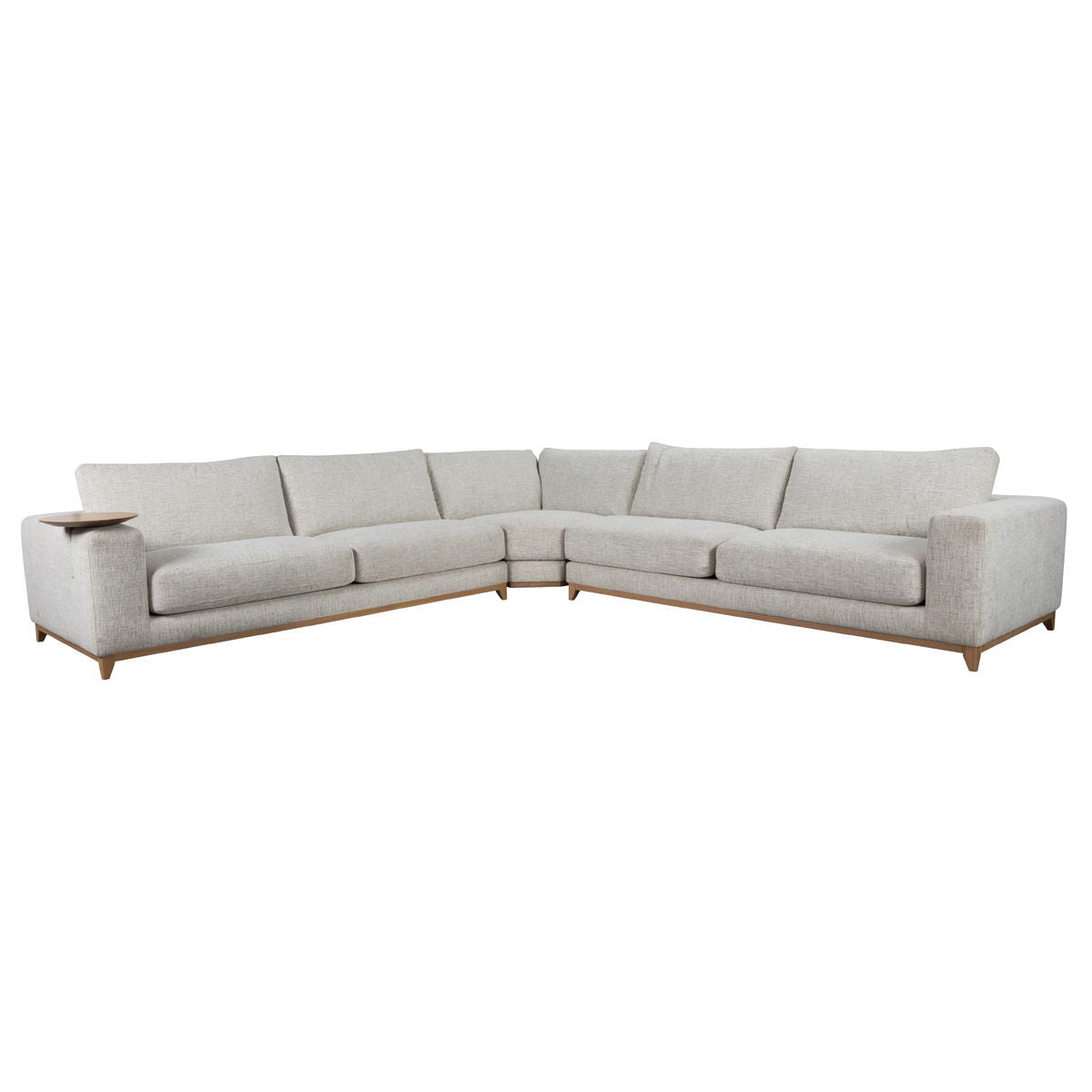
A modular sectional can make a living room feel tailored to the way you actually live, whether that means movie nights with the family, relaxed entertaining, or a quieter place to read. The key to how to arrange a modular sectional is not simply filling the largest open wall. It is creating a comfortable seating zone with enough room to move, a clear focal point, and proportions that suit the room.
Unlike a fixed sofa, modular seating gives you options. A corner unit, armless chair, chaise, ottoman, or bumper can shift the entire mood of the space. That flexibility is valuable, but it also means a layout should be planned before each piece is placed.
Start With the Room, Not the Sectional
Before deciding on an L-shape, U-shape, or chaise configuration, measure the room and note the architectural features that cannot move. Include windows, doors, fireplaces, media walls, built-ins, floor vents, and the natural path people take through the room. A sectional that looks balanced in an open showroom can feel oversized if it narrows the route from the entry to the kitchen or patio.
Use painter's tape on the floor to mark the sectional's full footprint. This simple step reveals more than a room sketch alone. You can walk around the taped outline, open nearby doors, and see whether the chaise extends too far into a traffic lane. If you are considering a coffee table, mark that footprint, too.
In most living rooms, leave roughly 30 to 36 inches for a primary walkway. Tighter spaces can work with less, but the room may begin to feel crowded. Between the sectional and coffee table, aim for about 16 to 18 inches so people can set down a drink without stretching or squeezing past furniture.
Choose the Focal Point First
Every good sectional arrangement answers one question: what are people facing? In many homes, the answer is the television, a fireplace, or a view through large windows. The sectional should support that focal point rather than compete with it.
If the room has a fireplace and television on the same wall, an L-shaped sectional can face that wall with the return extending along the side. This keeps the viewing angle comfortable and gives the room a natural gathering shape. When the fireplace and television are on different walls, the choice depends on daily use. A household that watches movies most evenings may prioritize the media wall, while a formal sitting room may be better oriented toward the fireplace or view.
Avoid placing every seat too far from the center of the conversation. A sprawling sectional may look impressive, but if someone seated at one end feels disconnected from everyone else, the layout is not doing its job. Modular pieces often make it easier to reduce or expand the arrangement according to the scale of the room.
How to Arrange a Modular Sectional in Common Layouts
The best configuration depends on both the room shape and how the space is used. There is no single correct arrangement, but a few layouts consistently work well.
Use an L-Shape for Most Living Rooms
An L-shaped modular sectional is often the most practical choice for a rectangular room. Place the longer side along the primary wall or facing the focal point, then use the shorter return to define the seating area. This arrangement offers generous seating without enclosing the room.
Think carefully about which side receives the chaise or return. In a room with an open path on one side, position the chaise away from that pathway when possible. The goal is to create a comfortable corner without making guests step around an extended cushion every time they enter the room.
An L-shape also works beautifully as a room divider in an open-concept home. Float the back of the sectional toward the dining area or kitchen, with the seats facing the living room focal point. Add a narrow console behind it if there is enough clearance. This gives the back of the furniture a finished purpose while creating a convenient place for a lamp or decorative accents.
Try a U-Shape for Conversation and Family Time
A U-shaped sectional makes sense in a larger room where several people regularly gather. It naturally turns seating inward, which is ideal for conversation, games, and casual entertaining. A modular ottoman in the center can function as a coffee table with a tray, extra seating, or a place to stretch out.
The trade-off is space. A U-shape needs a generous central area and clear access at one or both ends. If the opening into the U is too narrow, the layout can feel closed off. It is often better to use a smaller U-shape with an open end than to crowd the room with every available module.
Float the Sectional in an Open Floor Plan
Many Orange County homes have open living areas where the challenge is definition rather than square footage. In this setting, floating a modular sectional away from the wall can make the room feel more intentional. The sectional becomes the boundary of the living zone, especially when paired with an area rug large enough to ground the entire arrangement.
Place the front legs, or ideally all legs, of the sectional on the rug. A rug that is too small makes even a beautiful sectional appear disconnected from the rest of the room. The rug should extend beyond the sides of the sofa and reach under the coffee table, giving the seating zone a finished, layered look.
Break Up an Oversized Room
A large great room can handle more than one seating area. Instead of pushing a huge sectional against a distant wall, use it to create a closer, more inviting conversation zone. Position it near the fireplace, media console, or view, then use occasional chairs, a bench, or a second smaller sitting area elsewhere in the room.
This approach prevents the common problem of furniture floating at the perimeter with too much empty floor in the middle. Luxury is not measured by how much furniture a room holds. It comes from thoughtful scale, comfort, and a layout that feels easy to use.
Balance the Sectional With Other Furniture
A modular sectional is usually the visual anchor of the room, so the surrounding pieces should support it. A coffee table with softer, rounded edges can balance the long lines of a large sectional. A rectangular table may work better with a clean-lined L-shape, while a round or oval table can improve circulation in a compact arrangement.
Add one or two accent chairs when the room allows. Chairs prevent the layout from becoming a single block of upholstery and provide flexible seating for guests. Angle them slightly toward the sectional rather than placing them flat against a wall. Even a small adjustment makes conversation feel more natural.
Side tables are especially helpful at the ends of a sectional. Someone using a chaise may not want a table beside them, but seats at the outer edges benefit from a convenient surface for a drink, reading glasses, or a lamp. Keep the table height close to the seat arm height for a more polished look.
Let Traffic Flow Decide the Open Side
One of the biggest advantages of modular furniture is being able to choose where the arrangement opens. That open side should usually face the most natural entry into the living area. If people approach from the kitchen, leave that side easier to enter. If the room opens to a hallway, avoid placing a bulky arm or chaise directly in that path.
This detail matters more than symmetry. A perfectly mirrored layout can still be frustrating if it forces everyone to walk around a deep corner piece. In a smaller room, removing one module or switching a chaise to an ottoman can make the entire space feel more usable.
Plan for Everyday Comfort, Not Just the First Look
A sectional should look elevated, but it also needs to work on an ordinary Tuesday night. Consider where people put their feet, where a pet tends to curl up, whether children need room to play, and how easily cushions can be reached for cleaning. If the sectional faces a television, test the sightlines from every seat, especially the corner seat where the angle can be less comfortable.
Modular pieces can be rearranged as life changes, but frequent reconfiguration is easiest when the room starts with a flexible foundation. Avoid placing every module tightly against walls or between heavy furniture. Leave enough breathing room for the sectional to adapt when you host guests, move, or simply want a different layout.
Common Modular Sectional Arrangement Mistakes
The most frequent mistake is buying for the wall instead of the room. A sectional may technically fit a wall measurement while overwhelming the depth of the space. Another is choosing the chaise side based only on a product photo rather than the actual room's entry points.
It is also easy to overlook the scale of the coffee table and rug. A tiny table in front of a deep sectional feels impractical, while an undersized rug makes a premium seating arrangement look incomplete. Finally, do not let the television determine every decision. Comfort, conversation, and passage through the room deserve equal consideration.
If you are unsure between two configurations, seeing the scale and upholstery in person can make the decision much clearer. At R&R Furniture Gallery in Fountain Valley, shoppers can compare modular sectional proportions, seat depths, and fabric options before deciding what feels right for their home.
The right arrangement should make people want to sit down, stay awhile, and use the room without thinking about the furniture at all. Start with the way your household moves through the space, then let the modular pieces shape a setting that feels comfortable, polished, and genuinely your own.
Shop Related Products at R&R Furniture Gallery
Compare the actual products below, review the selected size and finish, and contact us to confirm availability and lead times.

View Donovan - Sectional — options and current pricing →
Visit Our Fountain Valley Showroom
Bring your measurements and room photos to 18218 Euclid Street, Suite 110 A, Fountain Valley, CA 92708, or call 714-653-1523. Plan your visit to R&R Furniture Gallery.
Delivery Options
Free local drop-off within 50 miles of our Fountain Valley showroom. Check our current offer and delivery terms for eligibility. Your full address determines eligibility; assembly and white-glove service require a separate quote. Showroom pickup has no minimum purchase.
Explore free nationwide shipping on selected items. That separate collection contains eligible products with its own delivery terms. Contact us about delivery for other catalog products.