
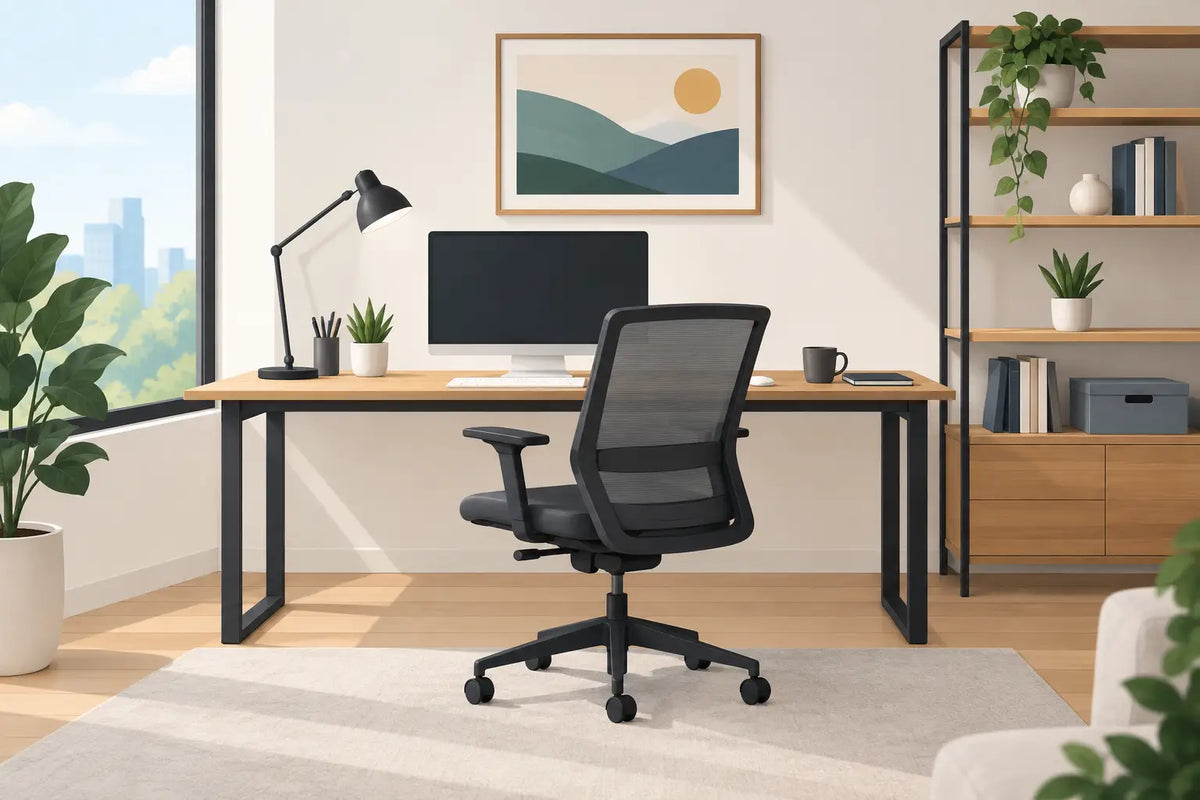
A home office has to do more than look presentable on a video call. It needs to support the way you actually work, whether that means long days at a computer, quick household paperwork, creative projects, or a shared study space. This guide to home office furniture focuses on the pieces that make work feel more comfortable, organized, and visually at home with the rest of your space.
The best setup is rarely the biggest desk or the most elaborate chair. It is the combination that fits your room, supports your posture, and gives every necessary item a proper place. Start with your daily routine, then choose furniture around it.
Start With How the Room Needs to Work
Before considering finishes or cabinet styles, take a realistic look at the room. Measure the wall where the desk will sit, but also measure door swings, windows, outlets, and the path around the chair. A desk can fit on paper and still make a room feel difficult to move through.
Think about whether the office is dedicated or shared. A spare bedroom office may need furniture that feels calm and residential after work hours. A living room workstation may call for a writing desk with a finished back, a slimmer profile, and storage that conceals files and cords. If two people use the room, separate work zones can be more useful than one oversized desk.
Your work habits matter just as much. Someone who uses one laptop and a notebook has different needs from a person working with dual monitors, a printer, paper files, and client samples. Avoid buying for an imagined version of your routine. Buy for the equipment and clutter you manage every week.
Choose a Desk Before Anything Else
The desk is the anchor of most home offices. Its size, shape, and finish influence everything around it, so it deserves more thought than simply choosing the widest option available.
A standard writing desk is a strong choice for laptop-based work and smaller rooms. Its open design keeps the room visually light, especially in a condo, apartment, or bedroom. The trade-off is limited storage, so plan to pair it with a file cabinet, bookcase, or credenza if paperwork tends to accumulate.
An executive desk offers a more substantial presence and often provides drawers or a larger work surface. It can suit a dedicated office where you meet with clients or want the furniture to feel more formal. Give it room to breathe, though. A large desk pressed tightly against walls can overpower a modest space.
For corner layouts, an L-shaped desk can create distinct areas for computer work and writing. It is particularly practical when you need to spread out, but check the orientation carefully. A return on the wrong side can block a window, interfere with a doorway, or put your primary workspace in an awkward position.
Desk height is worth checking before you fall for a design. Most desks are built around a standard seated height, but the ideal fit also depends on your chair and your body. When seated, your elbows should rest near a comfortable 90-degree angle while typing, without raising your shoulders or bending your wrists sharply.
Leave Enough Room for the Chair
The chair needs clearance to roll back and turn comfortably. As a useful planning rule, aim for about three feet behind the desk when the room allows. In a tight office, a compact chair without oversized arms may be a better decision than sacrificing the walkway.
Also consider what the desk faces. Looking toward a window can be pleasant, but direct sunlight on a monitor creates glare. Facing a blank wall can reduce distractions, while a desk positioned to see the door often feels more comfortable in a dedicated office. There is no single correct layout, only a better fit for your space and focus style.
Make Comfort a Non-Negotiable With Your Office Chair
A beautiful desk cannot make up for an uncomfortable chair. If you spend several hours seated, prioritize support and adjustability before color or upholstery. Look for a chair that lets you set the seat height, supports the natural curve of your lower back, and allows your feet to rest flat on the floor or on a footrest.
Seat depth matters as well. You should be able to sit back with support behind you while leaving a small gap between the front edge of the seat and the back of your knees. A chair that is too deep can feel restrictive, while one that is too shallow may not provide enough support for longer work sessions.
For a room that doubles as a guest room or living space, an upholstered desk chair can bring a softer, more furniture-like appearance. It may be ideal for shorter work periods or a stylish writing desk. For all-day desk work, a more ergonomic office chair is usually the wiser investment, even if its look is more tailored and functional.
Add Storage That Solves a Specific Problem
Storage should reduce visual noise, not simply add another large piece to the room. Begin by identifying what you need to put away: files, technology, books, supplies, presentation materials, or a printer. Open shelving and closed cabinetry serve different purposes, and many offices benefit from both.
A bookcase keeps frequently used books and decorative objects within reach. It can also add height and structure to a room with a low-profile desk. Style shelves with restraint. A mix of books, a small piece of art, and a few meaningful accessories looks polished. Overfilling every shelf makes even a well-designed office feel busy.
A file cabinet or lateral file is helpful if you need physical paperwork, while a credenza offers broader concealed storage and a useful surface for a printer or lamp. In an open-plan home, closed storage is often the better choice because it lets the workday disappear when the cabinet doors close.
If your office is short on square footage, look upward. A tall bookcase or wall-mounted storage solution can deliver capacity without taking up much floor space. Just be mindful of scale. Tall pieces work best when they do not crowd the desk or block natural light.
Layer Lighting for Focus and Atmosphere
Overhead lighting alone rarely makes an office feel comfortable. It can leave shadows across your desk or create glare on screens. A table lamp, adjustable desk lamp, or floor lamp adds focused light exactly where it is needed.
Place task lighting opposite your writing hand whenever possible, which helps reduce shadows across papers. If you work on a screen most of the day, look for lighting that can be directed away from the monitor. Warm, balanced light often makes the room feel more welcoming after sunset, especially when the office is part of a bedroom or multipurpose space.
Lighting is also a chance to connect the office to the rest of your home. A sculptural lamp, an elegant chandelier, or a refined metal finish can make a practical room feel intentional without distracting from its purpose.
Coordinate Materials Without Making Everything Match
A well-furnished office does not require a matching desk, bookcase, chair, and filing cabinet. In fact, a room can feel more considered when materials are coordinated rather than identical. A warm wood desk might pair naturally with a cream upholstered chair, dark metal lighting, and a textured neutral rug.
Pay attention to visual weight. A substantial wood executive desk may need lighter accessories and open shelving to balance it. A glass or slim metal desk may benefit from a grounded storage cabinet or an upholstered chair that adds warmth. If your office is visible from the main living area, echoing one or two finishes from nearby furniture can help the transition feel natural.
A rug is useful in many home offices, especially on hard flooring. It softens sound, defines the work zone, and adds a layer of color or pattern. Choose a low-pile option if your chair rolls over it regularly, or place a chair mat over the rug to protect both the rug and ease of movement.
A Guide to Home Office Furniture for Real Life
The most successful home offices allow for change. Your workload may grow, a partner may begin using the room, or a child may need a study area later. Choose foundational furniture that can adapt: a quality desk with a versatile finish, storage that can move to another room, and a chair you will still want to sit in years from now.
Before purchasing, compare measurements to your room one final time and think through delivery access, stairs, elevators, and tight hallways. Seeing desks, chairs, storage cabinets, lighting, and finishes in person can also make a major difference. At R&R Furniture Gallery in Fountain Valley, shoppers can explore home office pieces in a real showroom and talk through scale, style, and practical needs with a local team.
A thoughtfully furnished office does not need to feel like a corporate workspace. When the desk fits, the chair supports you, and clutter has somewhere to go, the room becomes a place where work feels easier to begin and more satisfying to leave behind.