
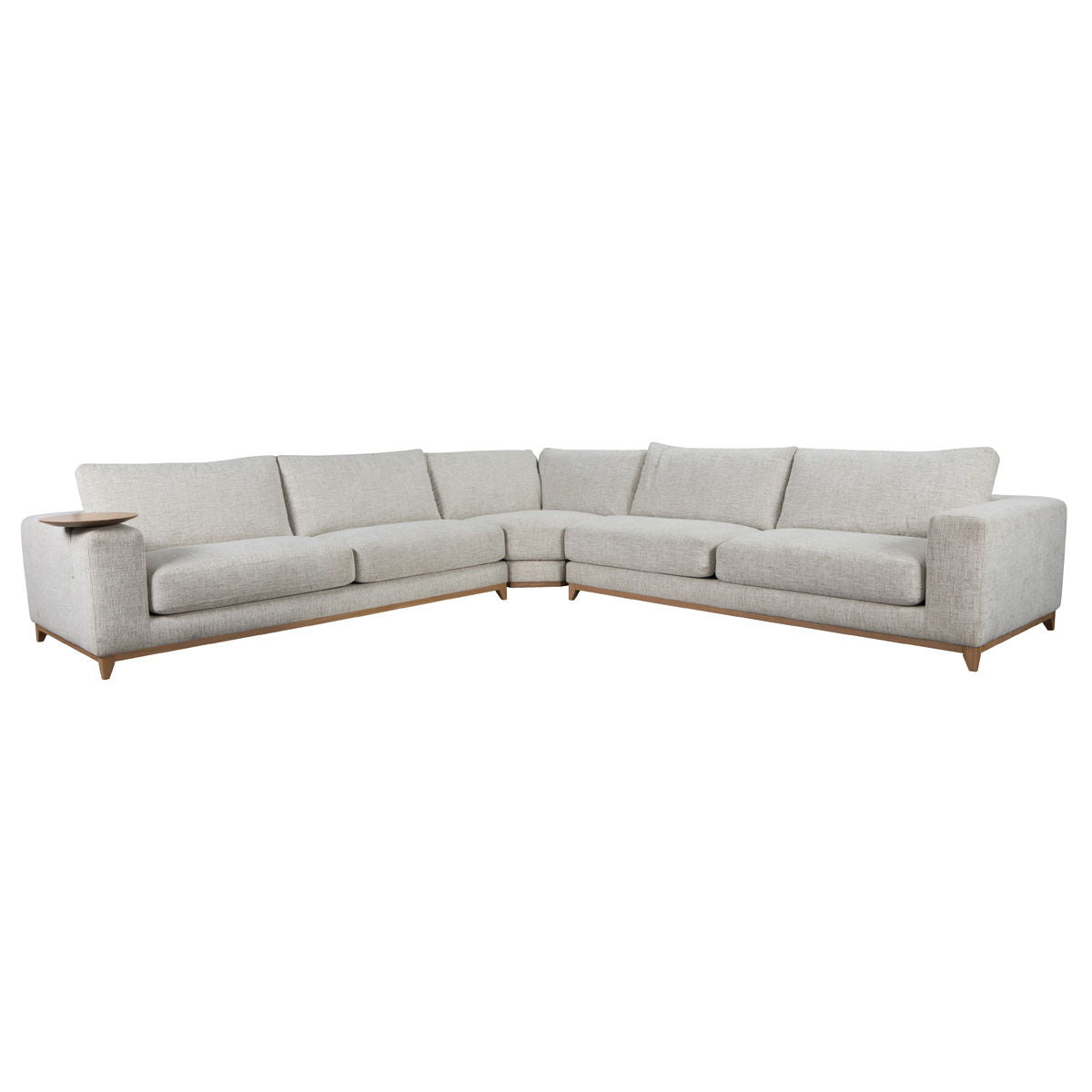
A small living room can make every furniture decision feel permanent. One oversized sofa arm can crowd a walkway; one poorly placed chaise can block the room’s natural flow. So, are sectionals good for small rooms? They can be an excellent choice when their dimensions, shape, and placement do more work than several separate pieces.
The key is not buying the smallest sectional available. It is choosing one that fits the way your room is actually used. A compact sectional can define a seating area, add generous comfort, and reduce visual clutter. The wrong one can make a room feel like it has no breathing room at all.
Why a sectional can work in a compact living room
A sectional combines the seating of a sofa and one or more chairs into a single, coordinated silhouette. In a smaller room, that can be useful. Instead of leaving gaps between furniture pieces or trying to fit an extra chair into a corner, you can create one intentional seating zone.
An L-shaped sectional is often especially practical. Tucked into a corner, it uses two walls efficiently while leaving the center of the room open for a coffee table, ottoman, or clear passage. It can also make a narrow room feel more organized by giving the eye one clean focal point rather than several competing furniture shapes.
For households that regularly gather for movie nights, conversation, or visiting family, a sectional may offer more usable seating than a standard sofa without needing a second large piece. This matters in Orange County homes and apartments where a living room may need to feel polished enough for guests but comfortable enough for everyday family life.
Still, a sectional is not automatically space-saving. Some have deep seats, oversized arms, bulky backs, or extended chaises that take up more floor area than a sofa and accent chair would. The best choice is the one that supports your routine without turning circulation space into furniture space.
Are sectionals good for small rooms with your layout?
Start with the room’s nonnegotiables: doors that need to open, hallways people use, windows you want to preserve, and the route from the entry to the main seating area. A sectional should not force everyone to walk around its longest side just to get through the room.
Measure the open area, not just the wall where the sectional will sit. Then use painter’s tape, newspaper, or cardboard to mark the sectional’s footprint on the floor. Include the chaise, arms, and enough room to walk comfortably around it. This low-effort step makes it much easier to see whether a piece that looks proportionate online will feel right at home.
As a general planning guide, aim to preserve a clear walking path of about 30 to 36 inches where possible. Leave roughly 16 to 18 inches between the front of the sectional and a coffee table so people can sit down and reach the surface comfortably. These are flexible guidelines, not rules that override your room, but they help prevent a crowded arrangement.
Choose the right sectional shape
For many small rooms, a two-piece L-shaped sectional with a chaise is the most adaptable option. It provides the relaxed feel people want from a sectional while keeping one side relatively open. Pay close attention to chaise orientation. A left-facing chaise and a right-facing chaise are not interchangeable once they are in the room.
If the sectional will sit against a wall, the chaise should usually extend toward the less active side of the room, not toward an entry or walkway. If it will float in the room, consider how its back will look from other angles and whether there is sufficient clearance behind it.
A reversible-chaise sectional can be a smart option for renters, frequent rearrangers, or anyone still deciding how the room will evolve. Modular sectionals offer even more flexibility, allowing you to change the configuration later. That flexibility is valuable, though modules can create a broader footprint than expected, so measure each configuration rather than assuming it will fit.
A small corner sectional can work beautifully in a square room, while a compact chaise sectional often suits a long, narrow space. A U-shaped sectional is usually harder to justify in a truly small room because it can consume the center of the floor plan. It may work in an open-concept space with a clearly defined living zone, but it needs careful measuring.
Dimensions that matter more than the label
Terms such as “apartment-size” or “compact” are helpful starting points, but they are not measurements. Always review the full dimensions, including width, depth, chaise length, seat depth, arm width, and back height.
For a smaller room, low or moderately scaled arms often make a meaningful difference. Wide padded arms may be comfortable, but they can add several inches of width without adding another seat. A sectional with slimmer arms and a tailored profile often provides more usable seating in the same overall footprint.
Seat depth deserves equal attention. Deep, lounge-style seating can feel luxurious, especially in a large family room, but it may project too far into a compact space. A more moderate seat depth can make the room easier to furnish and may provide a more upright, conversational sit.
Back height affects visual weight. Lower backs can help preserve sightlines and make a room feel more open, particularly in an open-concept layout. Higher backs may feel more supportive and substantial, but they can visually divide a small room when placed away from a wall. Neither is inherently better. The right choice depends on comfort preferences and the room’s proportions.
Details that make a sectional look lighter
Furniture can occupy the same amount of floor space yet feel dramatically different in a room. Raised legs are one of the simplest ways to reduce visual heaviness. Seeing a little floor underneath the sectional creates a more open impression than a fully skirted or low-to-the-ground base.
A clean-lined silhouette, narrow track arms, and a balanced cushion arrangement also help. If the living room has limited natural light, lighter neutrals, soft textured fabrics, or a gentle tonal pattern can keep the sectional from becoming a dark visual block. This does not mean every small room needs a beige sofa. A rich charcoal, navy, or warm brown sectional can still look refined when paired with lighter walls, a well-sized rug, and thoughtful lighting.
Avoid adding too many small pillows simply because the sectional is smaller. Two or three well-chosen accent pillows and a throw can feel intentional. A pile of oversized pillows often takes away from the seating you selected the sectional for in the first place.
Make the rest of the room support the sectional
Once the sectional is in place, resist the urge to fill every remaining gap. A small living room benefits from edited pieces with clear purpose. Choose a coffee table or ottoman that leaves enough clearance, and consider a round shape if sharp corners would interrupt the walkway.
A properly sized area rug can make the sectional feel grounded rather than crowded. In most cases, the rug should be large enough for the sectional’s front legs to rest on it. A rug that is too small can make furniture look scattered and can exaggerate the room’s limited size.
Instead of adding multiple accent chairs, consider one occasional chair with an open frame, a small swivel chair, or a pair of lightweight stools that can move when guests arrive. Storage ottomans, nesting tables, and media consoles with concealed storage can also reduce the everyday clutter that makes compact rooms feel smaller.
Lighting is another quiet difference-maker. A floor lamp with a slim base or a wall-mounted lighting solution can bring warmth without requiring a bulky side table. Keep tabletop accessories selective so the eye has room to rest.
When a sofa and chairs may be the better choice
There are times when a sectional is simply not the best fit. If your room has several doorways, a fireplace that needs to remain visible, or an unusual shape, a standard sofa paired with one or two flexible chairs may give you more options. This arrangement can also be better if you entertain in smaller groups and want seating that can turn toward conversation.
A sofa-and-chair layout is often easier to change later, while a sectional tends to establish one main orientation. If you enjoy refreshing your home seasonally or expect to move soon, modular pieces or separate seating may be more forgiving.
It also comes down to how you relax. If one person loves stretching out on a chaise every evening, that feature may be worth dedicating space to. If the chaise will mostly collect decorative pillows, a streamlined sofa could leave the room more functional.
See the scale before you commit
Photos and measurements are essential, but sitting on a sectional tells you things a product image cannot. You can judge the seat depth, arm height, fabric texture, cushion feel, and whether the proportions suit the look you want for your home.
At R&R Furniture Gallery in Fountain Valley, shoppers can compare sectionals in person and get practical guidance on scale, configuration, and room coordination. Bring your room measurements, a few photos, and the location of doors or windows. A thoughtful conversation before ordering can save the frustration of trying to make a beautiful piece work in the wrong layout.
The best small-room sectional is not the one that disappears. It is the one that gives your home a comfortable place to gather while leaving enough open space for life to move around it.
Shop Related Products at R&R Furniture Gallery
Compare the actual products below, review the selected size and finish, and contact us to confirm availability and lead times.

View Donovan - Sectional — options and current pricing →
Visit Our Fountain Valley Showroom
Bring your measurements and room photos to 18218 Euclid Street, Suite 110 A, Fountain Valley, CA 92708, or call 714-653-1523. Plan your visit to R&R Furniture Gallery.
Delivery Options
Free local drop-off within 50 miles of our Fountain Valley showroom. Check our current offer and delivery terms for eligibility. Your full address determines eligibility; assembly and white-glove service require a separate quote. Showroom pickup has no minimum purchase.
Explore free nationwide shipping on selected items. That separate collection contains eligible products with its own delivery terms. Contact us about delivery for other catalog products.